

Angkor Thom, the temple of 216 faces, second on most visitors list to Angkor Wat, a delight for photographers. Due to the temples popularity it gets quite busy during the day. The temple is on both small grand circuits used by many of the guides and tuk tuk drivers. Opening at 7.30am – 5.30pm, tourist numbers build during the day. However, numbers tail off late afternoon, giving a less crowded feel during golden hour, great for us photographers.
Want to skip the crowds? We visit this Bayon and beyond on our private, customisable Angkor Wat Photography Tour. Link in button below.
Angkor Wat photography guide – Bayon
Opening hours: 7.30am – 5.30pm

Timeless, smiles of the bodhisattvas at Bayon Temple—one of the many historic highlights you will capture on our guided Angkor Wat photography tours.
With golden hour in mind, plan your trip to enter the many lower chambers before this magical time. Prior to entering, grab a quick snap from the outside. During rainy season theres plenty of water about the temple creating a great reflection for your photograph, best position from the south east corner.
For those interested in the history, theres plenty of bas reliefs carved into the sandstone. Wonder around the outer walls to find these carvings. To the east the reliefs depict the battle with the Cham, origins of Bon Om Tuk, the Khmer water festival.

Capture the soul of Cambodia through your lens. Join our Angkor Wat photography tours to master low-light temple photography and shoot iconic scenes.
Entering from the east up one level we find two buddha statues protected by Naga, one in the north east corner, the better preserved is in the south east corner. Use the glowing light from the doorways to light up these splendid statues.
Back to the center and up a level we find a Lingam. This chamber is full of colour, great greens and cascading doorways makes for a nice shot. From here explore the lower chambers with the glowing soft light from many hidden doorways.

Capturing connections: A unique, behind-the-scenes moment from our Cambodia photo workshop, highlighting the respectful and candid cultural interactions you will experience on our tours.
Head up to the central sanctuary for golden hour. Get your timing right and the Buddha faces representing Bodhisattva Lokeshvara are lit with the falling sun. The angle of sunlight changes with the seasons. Summer solstice sees the sun setting 23.5 deg to the north, similarly, winter solstice sees the sun set the the south. While not so important, this will depict which side of the temple lights up with the late afternoon sun. The window of opportunity is short as we are relatively close to the equator, unlike places like Norway where, in the north the sun doesn’t set during summer months. However, the rise and fall of the sun are reasonably constant throughout the year with about 1 hour difference between summer and winter solstice.
That said, it’s easy to pop up and see where the light is coming from. Play with angles, look for good definition with the shadows on the faces, see how many faces you can get in one shot. Use a long lens to shoot one or two faces in isolation, or play with a wide lens to make faces appear large. The temple is popular and it’s not uncommon to see Buddhist monks here. There quite approachable and don’t mind their photos being taken, but as always, be respectful, ask, and show them your picture.
Take your time especially if the temple is busy. The tour groups will pass, leaving some tranquility. Exit and go shoot the monkeys, if you have any energy and battery life left. Angkor Thom, a splendid spot to finish your day.
To reserve your spot, book an Angkor Wat photography tour today.
You may also like Angkor Wat survival guide for photographers.

Layers of history: Faces of Angkor. We’ll show you the exact camera angles to capture these iconic Bayon faces.
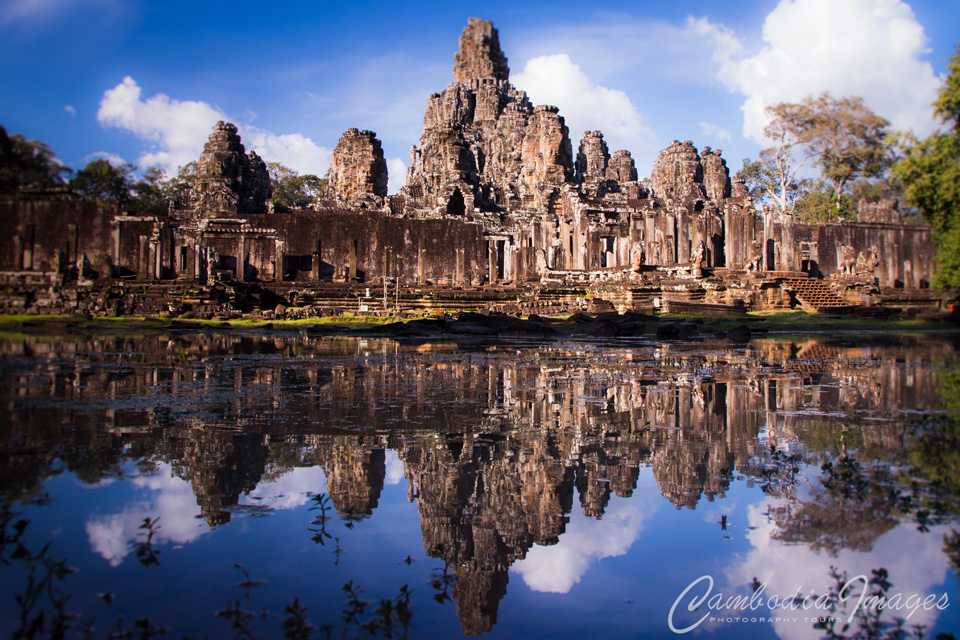
Double the magic: Capturing the perfect mirror reflection of Bayon Temple’s iconic towers.