
Kampot
Kampot, a once small town on the south coast of Cambodia, is a great hub for exploring. The countryside and local attractions can be a great experience for both the tourist and photographer. Grab a moto, rent a passapp or tuktuk and go explore.
The demise of Sinookvile and speculative investments from Khmer and Chinese has led to rappid growth in Kampot. With it’s popularity comes development, more guest houses, restaurants & bars, giving more choice to the traveller. Looking at the bigger picture and the large scale developments like Bokor Hill estate and casino, two new ports under construction with future plans for a marina, a man made island full of luxury homes and a central 42 story monstrosity the town rivals any part of Cambodia’s ‘development’ strategy.
However, Kampot still clings onto it’s charm. The town has many Chinese style houses adding to it’s character ( some say french colonial, but they are in fact Chinese). A recent visit to Kampot sees this charm slowly diminishing, with several ‘developments’ changing the feel of a once sleepy town. Short excursions out of the town can still be a delight. If you have travelled to Cambodia before, you will know that the people are the heart of the country. Kampot is no exception. The locals are mostly Khmer, with a few cham settlements along the waterways. Many westerners have made Kampot their home. The Expat and local cultures mix well making Kampot an easy going place.
Sitting in one of the many pleasant bars or resturants that line the river you are often treated an amazing sunset. Neon lights are gaining popularity, detracting from the natural beauty. For the photographer, a better option would be to get out onto the salt fields, where stunning views can be had, enhanced with the mirror flat reflections.
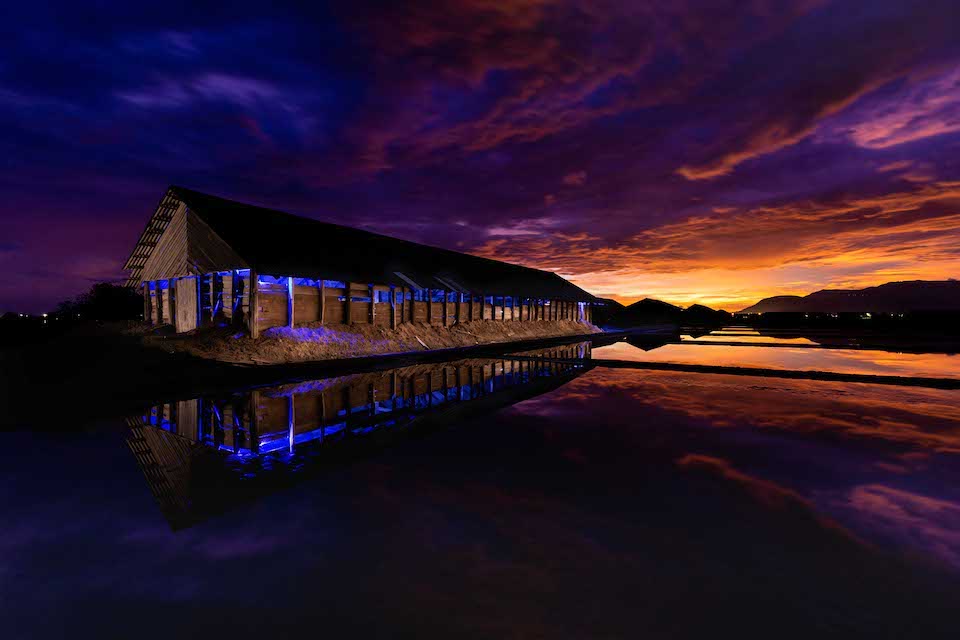
Lightpainting Kampot. When the sun goes down over the salt fields, the real creative work begins. Fancy light-painting rustic barn structures in remote Cambodia? Why not book a custom multi-day photography workshop!

While the temples of Angkor offer unmatched ancient architectural scales, southern gems like the Durian Roundabout in Kampot add vibrant, quirky local culture to your Cambodian photography portfolio. See our full custom itineraries beyond Siem Reap on our Cambodia photography packages.

Chinese shop fronts, often referred to as French, slowly disappearing with ongoing development.
- Kho Tray – Fish Island
For some mixed culture, head to to the island (Tray Koh), over the old bridge then second left and over a new bridge. A mixture of rice paddy’s and salt fields give the place a uniqueness. Khmer and cham people live here along with a scattering of developments. Look out for the Cham villages nestled along the river, head to the end of fish island for a small beach area of check out the salt fields early or late in the day.
- Bokor Hill
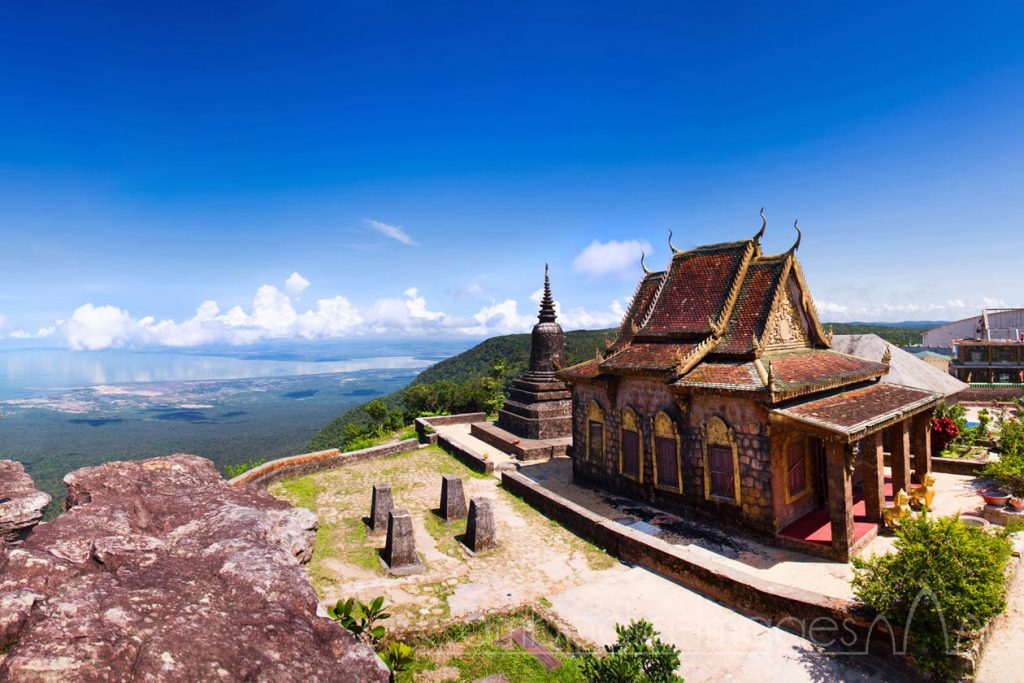
Bokor hill has one of the best scenic roads in the country. Visit on a moto or hire a pass app for a great day out The views can be stunning if you get a clear day. Theres a waterfall, pagoda & some old royal ruins to visit along with Bokor Palace Hotel. Sadly the plateau of Bokor national park has succumb to developers with large areas cleared for building projects.
Head up the windy hill 10k west of Kampot. Keep an eye out for the pig tail macaque monkeys, it you are lucky there are resident giant hornbills sometimes seen flying overhead. First stop is Yea Mao, looking over the sea to safeguard travellers. Opposite here, down a narrow path is the royal residence, with once great views.
Carry on accross the plateau, and the developments untill the road splits at the new fule station. Head right for the waterfall and home to the pitcher plant, an odd shaped species well worth seeking out. Head left at the service station th the new casino. Behind here is Sampov Pram Pagoda with it’s great views and a scattering of resident monks. Carry on past the casino and abandoned church to the old Bokor Palace Hotel, featured in the film City of Ghosts. The hotel has been recently restored, however the lichen greens and mould are slowly making a comeback.

Perched on the misty edge of a 1,000-meter cliff, Wat Sampov Pram on Bokor Mountain offers a dramatic contrast to the lowland plains of Siem Reap. If you love photographing hidden mountain sanctuaries like this, explore our comprehensive Angkor Wat photography tours that showcase Cambodia’s most stunning sacred spaces.
- Cham Fishing village
There are some great Cham villages around Kampot. Some small, some big, offering great photo opportunities. The best thing about these more remoter places is that tourists seldom visit them. Cham are traditional fishermen, their villages nest on the side of the estuaries. There vivid green boats make for great pictures, not forgetting the daily boat race along Kampot river front (aka KSG).

As the sun dips below the horizon, the Kampot river turns into a canvas of liquid gold, casting dramatic silhouettes of local fishermen’s boats. Mastering exposure during these fast-fading golden hours is a core skill we focus on. Whether you are capturing the sun setting behind the iconic spires of our Angkor Wat photography tours or tracking river life in the south, our hands-on workshops teach you how to perfectly balance difficult backlighting.
Kampot, East to Vietnam
Heading east along R23, over the river rewards you with splendid scenery, especially at the beginning and end of rain season when the farmers are planting and harvesting rice & crops. Head towards the secret lake for some great cultural views. All the countryside from here to the Vietnam border is worth exploring.
- Caves
Hidden amongst the paddy’s are a selection of caves, worth a visit. The nearest to Kampot is Phnom Kbal Romeas. A bit further is Phnom Chhngok Cave with a small 6C Angkorian temple inside. This is thought to be the oldest known, some say it dates back much further, maybe 2000 years.

Hidden deep within a limestone cavern, the remarkable 7th-century brick shrine of Phnom Chhnork offers a rare glimpse into Cambodia’s pre-Angkorian history. Photographing ancient architecture framed by massive, mossy stalactites presents a wonderful challenge in handling high-contrast, natural cave lighting. If you are captivated by Cambodia’s sacred archaeology, our core Angkor Wat photography tours take you even deeper into the evolution of Khmer temple architecture with expert hands-on field instruction.
- Kep
Around 30 min out of Kampot you will arrive at Kep. The roadways in Kep seem to resemble an F1 circuit with 3 lanes each side in parts, I guess someone has big ideas for this place. The crab market and near by beach is a must, swamped with local tourists during public holidays. Just up from the crab market is the a new man made beach. This dosent seen to attract people in it’s present condition. During my last visit here there was a fair sea breeze.. Theres a scattering of old villas around Kep. Locals are reluctant to occupy these as they are afraid of ghosts. There buildings are not too photogenic as there are mostly over grown and rundown, but still a good historical opportunity.

When evening falls, the rustic wooden stilt restaurants of the nearby Kep Crab Market light up the coastline. Capturing the warm glow of these famous seafood spots reflecting off the ocean waves requires a steady tripod and a calculated long exposure. Our customized itineraries bridge the gap between intensive architectural shoots on our Angkor Wat photography tours and relaxed, atmospheric evening workshops along Cambodia’s beautiful southern coast.

Photographing Kep’s iconic monuments! Check our custom Cambodia Photography Tours.
- Rabbit Island
Rabbit Island, a short boat trip off the coast of Kep, offers a nice getaway. Many prople pop over here for a day out. The Island is best enjoyed once these day tourists have gone home. Stay the night in a beach hut and enjoy the sunset in peace. Part of the Island is being developed for a casion but we are hearing the beach is spared, for now.

Rabbit Island on a good day.
- Kampong Trach
Further afield towards Vietnam you will find Kampong Track Cave, It’s an ex khmer Rouge stronghold and probably the best cave to visit in the local area. The ceiling has caved in, giving interesting light conditions. There’s with a scattering of modern buddhist sculptures. As with all cave’s attracting tourists, there is a small admin fee followed by numerous children wanting to be your guide. Do check out the rear of this limestone formation for some more caves and look out for elephant mountain in the distance with an old resovior at it’s foot.
- Pepper Farm
Kampot pepper is the finest you can get, favoured by top chef’s from around the world. A trip to the pepper farms is a must if your here in the right season. Harvesting is from March until May. Many opt for the larger commertial operation well advertised in Kampot, however the smaller family run farms are a better option. Why not try Sothy’s Pepper Farm family run business with a free guided tour.
- Angoul Beach
Between Kep and Vietnam is Angkoul Beach. Once rarely visited, this place is becoming popular with the new costal road from Rabbit Island ferry. It’s a great place for a spot of lunch, attracts a few Khmer and has a nice sunset view. Take the costal road from Kep you will past a couple of Cham fishing ports, well worth a ride. Beyond Angloul beach are more salt fields.

Capturing Reflections: The Best Time of Day for the Kampot Salt Fields.

Cham fishing vilage on the new costal road from Kep to Angoul beach.
- Vietnam border
The furthest you can travel East is to the border of Vietnam. This is a great place to stop and observe the goods being transported in all sorts of imaginative ways. Good early and late in the day as locals tend not to be so active in the mid day heat.

Traders at the Cambodia Vietnam border.
- Summary
All the above is easily achieved in a couple of days from Kampot. Kep is rather spread out but does have a man made beach, whereas Kampot is more compact, with an abundance of reasonable quality eateries, certainly the best place to use as a base when exploring the south of Cambodia.
Kampot is great all year round. Rain season, June through to November, can make a trip up Bokor problematic, but it brings the rice planting. End of rain season the rice is harvested, both great photographic opportunities. The dry season sees the salt workers get to work.

Simplifying the frame.
Explore Cambodia’s coast with us on our multi-day custom photo workshops.
